


If you’re not exactly sure what sustainable travel means, you’re probably not alone. Hopefully, that’s why you’re reading this article…to learn more.
Terms like ecotourism, sustainable travel and tourism, green travel, slow travel, regenerative travel and responsible travel are often used interchangeably and ambiguously, leaving travelers to their own devices to decipher what they mean and cut through greenwashing claims.
While the environment is, of course, a huge consideration when talking about sustainable travel, that’s only one part of the equation.
And contrary to popular belief, sustainable travel is not a niche type of travel. The travel industry, as it stands today, is not sustainable.
It needs a total transformation.
But why?
The good and the bad
According to the World Travel & Tourism Council, the travel industry’s global economic impact is set to reach an all-time high of $11.1 trillion in 2024, generating one in every ten dollars worldwide. Excellent news for the communities that are economically sustained by tourism, right?
Well, it depends how you look at it. With all that much needed economic growth, there are also negative environmental impacts. UN Environment data shows that tourism’s consumption of resources (things like energy, water, land and fossil fuels), is commensurate with the creation of waste, carbon emissions and the loss of biodiversity in natural areas.
In fact, they estimate that in a ‘business-as-usual’ scenario, tourism will generate triple digit percentage increases in those same negative impacts if we keep doing the same.
For that reason, the tourism industry needs to make drastic changes to be as carbon neutral (and negative) as possible.
Recent years have seen a rising tide of sustainable travel choices and fortunately, an increase in the demand, as well as supply of sustainable options.

Climate x travel: How we got here
To really understand what sustainable travel means and why it’s important, we need to take a step back to understand how we got here.
Global travel, as we know it, is complicated.
Innovation, the rise of industrialization and modern conveniences like cars, planes and plastic all seemed like brilliant ideas…at the time. When the introduction of fossil fuels changed the way we lived and moved through the world, the negative impacts of carbon emissions weren’t a major consideration.
While they have certainly made our world smaller and connected us to one another, those same conveniences have also done great harm to biodiversity and our planet.
Air travel and cruise ships began enabling mass tourism and gradually, our carbon footprint became inextricably linked to climate change
The problem with flying
Aviation accounts for 2.5% of global CO₂ emissions, but it has contributed around 4% to global warming to date. While sustainable aviation fuel (SAF) is on the (slow) rise, demand far outweighs supply. The rise of low-cost air carriers in the last 20 years has made short-haul travel easier and more affordable than ever, particularly in Europe, further exacerbating the problem.
The hospitality industry has grown by leaps and bounds in the last century, connecting cultures and creating economic opportunities, while simultaneously generating massive amounts of environmental pollution.
Emissions from aviation, deforestation and plastic waste have had a collective impact over time, deepening our situation. The more carbon that enters our environment, the more the global temperature rises and incidents of extreme weather increase.
Changing temperatures are disrupting weather patterns and extending seasons, leaving climate more unpredictable. These climate impacts are doing irreparable damage to to fragile destinations like small island nations.
Meanwhile overtourism has been crippling local communities, while others are desperate for tourism dollars.

Why should we care?
Ask yourself what kind of traveler you are. Why do you travel? Is it for the natural beauty of a destination? What about the food or culture? Or maybe it’s for the people? Even more importantly, what kind of planet do you want to live on? Or leave behind?
During and post-Covid, the environment saw a brief reprieve when world travel ground to a halt. Understandably, the skies were cleaner as global air pollution numbers fell, the murky canals of Venice became clearer and wild animals roamed freely, reclaiming urban spaces in their natural habitat, giving biodiversity an opportunity to rebound during the slight pause in human intervention.
Travel restrictions were a blessing in disguise for conservation efforts, and places like New Zealand became a utopia for wide open spaces where one could immerse themselves safely in nature.
And of course, as soon as the world opened back up, everyone was desperate to get out of their houses and…travel.
Slowly at first, but then, all of a sudden, we witnessed crushing tourism numbers where it seemed like everyone in the world was spending their summer in the same five cities in Europe.
Travel marketers have made quick work trying to recapture pre-pandemic tourism numbers, driving international travel.
Social media is also responsible for fomo-inciting imagery, resulting in overtourism and drive-by tourism where travelers check destinations off their list just so they can get the same shot.
So why should we care?
Because if we don’t, we will continue contributing to the climate crisis, biodiversity loss and the destruction of culture and local economies around the world. And travel means nothing without any of those.

Sustainable travel v. regenerative travel
Until recently, there was but a gentle drumbeat of interest in sustainable travel rising. Nowhere near the tipping point we need it to be at though.
In the past year alone, there has been a subtle increase in searches for green and sustainable travel choices and fortunately, an increase in the demand and supply of sustainable options.
Years of isolation combined with increasing climate impacts have inspired travelers to seek travel that is more immersive in nature, smaller in size and more authentic.
From a bird’s eye view, sustainable travel represents travel that looks at the impact of one’s choices on both people and planet, increasing the benefits and reducing the harm.
Many argue that ‘sustainable’ is no longer good enough. That we need to focus more on regenerating, which is true. At the end of the day, sustaining what we currently have is just not good enough.
We need to take the next urgent step to restore, improve and regenerate the destinations we love to visit with a net zero, decarbonized tourism industry.
How?
By supporting local communities; preserving culture and heritage; and doing it all with an environmental footprint that is regenerative and carbon negative.
The road to net zero
Decarbonization, net zero, 1.5C, carbon neutral, carbon negative, carbon budget... Scientific data and jargon about the climate can be confusing, overwhelming and scary.
The details of the IPPC report, The Paris Agreement, the Glasgow Declaration on Climate Action in Tourism and the Sustainable Development Goals are definitely not top of mind for most people. UNWTO definitions for ecotourism and sustainable tourism are long-winded enough to make anyone’s eyes glaze over (we’ve seen it).
So how can travelers make the connection between the impact of travel on the climate…and more importantly, what needs to be done differently?
The Travel Foundation recently released a report called ‘Envisioning Tourism in 2030 and Beyond.’ In it, a scenario is laid out to guide the tourism industry to net zero by 2050.
The science is clear; there is an urgent need for a net zero transition for tourism industry.
On a consumer level, it comes down to making sustainable choices which is easier to do once you understand what to look for, who to trust and what to book.
To oversimplify sustainable and regenerative tourism and what it means to travel better, just remember to prioritize these three things when you plan any travel: footprint, culture and community.
Breaking sustainable travel down into three pillars guides us towards the best of travel, helping us plan better. It’s a tall order for every trip to be 100% sustainable, but as long as you consider your environmental footprint and incorporate responsible practices wherever you can, you’re doing your part.

FOOTPRINT
Tread lightly. Aviation is the biggest offender and your carbon footprint is greatly expanded when you travel. Be conscious of that and plan trips accordingly.
One way to help cut down emissions is to stay closer to home and use public transportation or an electric vehicle. Travel doesn’t always need to be far-flung, it can be anywhere outside of your home.
When you’re planning your next trip, consider what transportation option you need to take. If you can avoid a flight by taking ground transportation, that will always be best. If you have to fly, fly better. Seek airlines that use SAF, book direct flights, fly in economy and stay in one place longer so you limit the amount of flights needed.
When choosing a hotel, don’t just take sustainability rankings at face value, try to support hotels that are doing their best to preserve the environment. Look deeper into how the property was built.
Does it have LEED-certified design? Was it repurposed from another building? Was it built with sustainable and local building materials? Do they operate on renewable energy? Do they prioritize energy and water efficiency?
The best hotels and eco-friendly accommodations go way beyond not washing hotel towels, eliminating single-use plastics and using energy-efficient lighting.
While many have gone through a rigorous green certification program, many small properties don’t and it may simply be because it is cost-prohibitive, not because they aren’t doing all the right things.
That’s why it’s always a good idea to take the extra time to understand what efforts are being made (or not made). If a hotel is really focused on sustainable tourism practices, there will usually be a section or page on their website where they share it proudly.
Something else to consider is a hotel’s supply chain. Where are products and food sourced from? Is there an on-site garden? Do they have a KM0 philosophy that allows them to partner with local farmers? How do they manage food waste?
Is your hotel choice working to protect and conserve biodiversity?
If this seems overwhelming and you’re not sure how (or don’t want) to evaluate, use a sustainable hotel booking website that specializes in highlighting climate-conscious and responsible properties.
And remember-being green doesn’t necessarily mean lacking in modern amenities and comforts. Vila Planinka in Slovenia is a great example of sustainable luxury. Conversely, it’s important to remember that hotels that are sustainable aren’t always more expensive either.

CULTURE
Another important part of sustainable and responsible tourism is protecting and preserving culture and heritage. This can include everything from the legacy of physical artifacts, attributes from a society that are passed down over generations, living culture (sometimes called ‘intangible cultural heritage’) like the practices, expressions or knowledge and skills that are taught and shared over generations, creating a sense of identity.
Natural heritage refers to a geological or physical site that offers natural beauty and needs conservation and protection, like UNESCO World Heritage sites that are protected so they can be enjoyed for many future generations. Seek out cultural sites and support those with a visit, so you’re preserving the heritage of a region.
Destinations like Venice, Iceland and Barcelona have gotten a lot of press for being over visited and we get it; they’re beautiful destinations. But cities can only handle a certain amount of tourism before they start to buckle.
We love places like Costa Rica, Machu Picchu and National Parks as much as you do, but it’s important to spread out travel (and economic benefits) year round. If you travel (with everyone else) during peak season, locals may have plenty of business, but what about the rest of the year?
Try to spread your travel (and economic benefits) year round, throughout a country and visit the lesser known spots (for example, skip Venice and head to nearby Friuli). When cities become overcrowded, the culture becomes diluted as locals tend to cater more to tourists.
Go somewhere you’ve never heard of and make your own discoveries. Or try picking a village from the UNWTO’s Best Tourism Villages list for your next vacation. These are small towns that rely on, and will benefit the most, from tourism dollars.
By visiting these areas, you’re guaranteed to walk away with a memorable experience reinforced by the knowledge that your money is helping to preserve their culture.
COMMUNITY
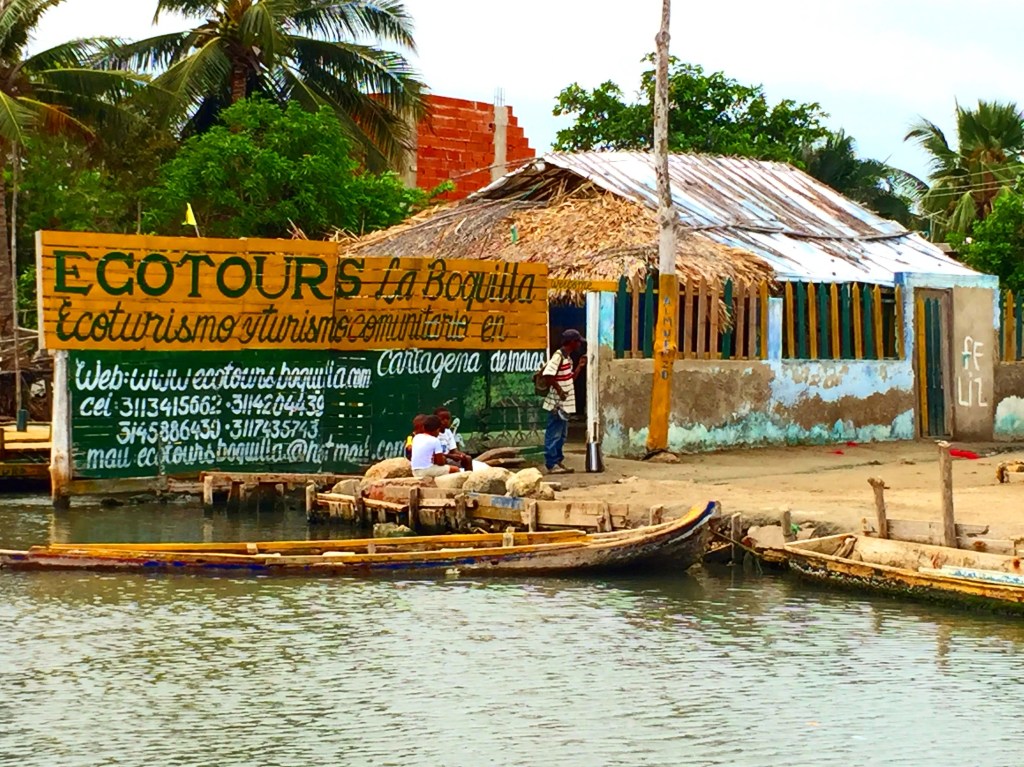
Always do your best to support the local people and local businesses as that is the best way to have a positive impact on a local community.
When in doubt, choose local guides that can provide a genuine travel experience that has a low environmental impact on the local environment. Make sure those tour operators have a track record of hiring local residents and investing in local culture and local economy.
Shop local, always. In many communities, the only opportunity to sell products is in person. There may not be access to a global market, so people in these communities rely on tourism for their livelihood.
If you shop at a global chain store or restaurant, the majority of that money will leave the local community (also known as tourism leakage). Keep and eye out for sustainable practices, pay fair prices and appreciate the value of the handmade.
It’s increasingly difficult to find souvenirs that aren’t made in China, so take the extra effort to seek out locally-made products and support those artisans.
Stay in locally-owned accommodations. Large hotel chains often bring in international staff, potentially taking jobs away from locals. Staying local makes sure your tourism dollars stay in the community you are visiting.
Hotels and restaurants that source products locally make sure that the community is included in the economic benefits that come from tourism. Who wants to go to Brazil to eat at McDonald’s instead of at local restaurants anyways?
When you eat, sleep, shop and buy local, you’re having a positive economic impact in the community, while getting an authentic experience, which is a win-win for everyone.

A more sustainable future in tourism
The good news is that many sustainable travel options and best practices already exist.
Start small. Ditching plastic bottles for a reusable water bottle is low-hanging fruit. Seek out conservation projects that are fun and easy ways for travelers to make a difference in the natural environment they’re visiting.
Organizations like the Global Sustainable Tourism Council (GSTC) have been working hard to guide and advise sustainable accommodation providers with their [GSTC] criteria. The Long Run is another organization committed to helping businesses create and implement climate action plans that preserve and protect biodiversity.
Tour operators like Responsible Travel, Intrepid and G Adventures have sustainability practices integrated into their core values and global standards. Travel brands like Wild Terrains support women-owned small businesses, providing a path for economic development.
If one thing is clear, there is work to do, but collaboration will be key to creating a more sustainable future of tourism, hopefully way before 2050.
MICHELLE ARELLANO MARTIN


